
What to do after a motorcycle accident in El Paso
A crash on a bike calls for a different first move than a crash in a car, and the order matters.
See If My Case QualifiesFree. No obligation. Takes about 2 minutes.
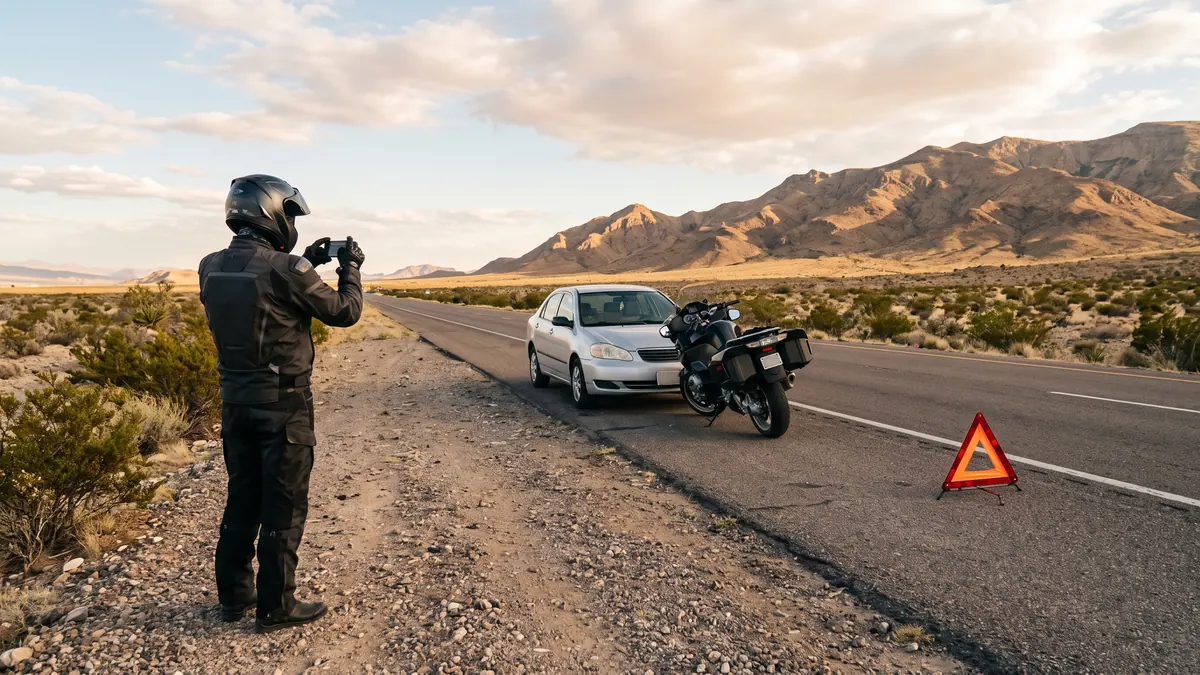
The first move after a motorcycle wreck is different from what a car driver does, and it starts with your body, not your bike. Here are the eight steps that protect your health first and your claim second, in the order they actually matter for a rider.
1. Keep your helmet on and check yourself first
Don’t reach for the chin strap right away. Leave your helmet on unless you’re struggling to breathe or bleeding heavily, since removing it the wrong way can turn a neck injury into something far worse. Take a slow inventory of your own body before you try to stand: numbness, sharp pain, or trouble moving a limb are all reasons to stay still and wait for help.
2. Get clear of the lane, if you’re able to move
If you can move under your own power and staying put isn’t safer, get yourself and the bike out of traffic. A downed rider is hard for other drivers to see, especially at night or on a fast stretch like I-10. If moving hurts or feels wrong, stay where you are and let responders come to you instead.
3. Call 911 and ask for an officer
Call it in whenever someone’s hurt, whenever the other driver takes off, or whenever a bike is blocking a lane. Dispatch sends both police and paramedics when you say someone’s hurt. An officer at the scene means a report gets written, and that report becomes the record everyone else works from later.
4. Make sure the report notes your gear, not just the bike
Officers are used to writing up car damage. Point out your helmet, jacket, and boots too, and mention if any of it shows impact damage. A report that only describes the bike can undersell how hard you actually hit the pavement.
5. Photograph three things separately: the bike, your gear, and the road
Treat these as three different sets of evidence, not one. Get the bike’s damage from multiple angles, your helmet and riding gear up close, and the road surface itself, including any gravel, potholes, or debris near where you went down. A scuffed jacket or a cracked helmet shell can say more about impact force than the bike ever will.
6. Trade information, skip the blame talk
Get the driver’s name, phone number, insurance company, and plate number, and hand over the same. Stick to facts. Guessing out loud about who caused it, even to sound reasonable, can end up working against you later.
7. See a doctor even if you feel fine
Book an exam within a day or two no matter how you feel standing at the scene. Riders often walk away from real injuries on adrenaline alone, and a dated medical record ties what hurts now back to the crash, not to something an insurer can argue happened later.
8. Tell your own insurer what happened, not whose fault it was
Report the crash to your own company with the basic facts: date, location, who was involved. You don’t need to offer an opinion on fault, and you don’t owe the other driver’s adjuster a recorded statement yet.
Once the officer’s report is on file, here’s how to actually get a copy of it and what to check once you have it. How much time you have to act from here sits behind its own set of rules, and what your own health coverage should cover in the meantime is worth reading before the first bill lands.
Checklist done, and you’re probably still sore and staring at a damaged bike wondering what happens next. That’s a normal place to be. A free case review can walk through what you’ve already got and what’s still worth doing.
Common questions
Should I take my helmet off right away?
Leave it on unless breathing or heavy bleeding makes that unsafe. Pulling a helmet off the wrong way can turn a neck injury into a worse one, so let paramedics handle removal if you're able to wait for them.
My bike looks fine. Do I still need to see a doctor?
Yes. A motorcycle absorbs almost none of the impact for you, so pain and swelling can show up hours or days after the adrenaline wears off. A same-day or next-day exam also ties your injury to the crash date on paper, which matters once a claim starts.
The other driver wants to trade cash and skip the report. Should I?
Be cautious. A driver pushing to avoid a report is often trying to dodge a bigger problem with their own insurance, and a handshake deal won't cover injuries that surface later. Get their information and call it in anyway.
Related pages
Do I Need a Lawyer
For riders, the honest answer leans yes more often than it does after a car wreck, and it's worth understanding why.
Learn more →Your Crash Report
The report is evidence, not just paperwork, and a rider's copy is worth reading line by line.
Learn more →Attorney Fees
Most riders pay nothing upfront. The agreement you'd sign spells out exactly when that changes.
Learn more →Lane Splitting
No, lane splitting has been against the law in Texas since September 1, 2023, though the rules leave more room than most riders realize.
Learn more →See if you have a case — free
Answer a few quick questions. If your case qualifies, an independent attorney who serves El Paso can review it at no cost.
See If My Case QualifiesNo fees unless you win. No pressure to hire anyone.